
The Power of Shopping Local: Why Where You Spend Your Money Matters


The Power of Shopping Local: Why Where You Spend Your Money Matters
When you spend £20, it is easy to think of it simply as £20.
You buy something you need. The transaction ends. You take your purchase home and get on with your day.
But where you spend that £20 can make a surprisingly big difference.
Spend it with a large national chain or an online giant, and much of the value can quickly leave your town. Spend it with an independent business down the road, and more of that money has the opportunity to circulate through the local economy.
And when you take that idea one step further, buying something made locally and sold locally, the impact can be even greater.
That is the real power of shopping local.
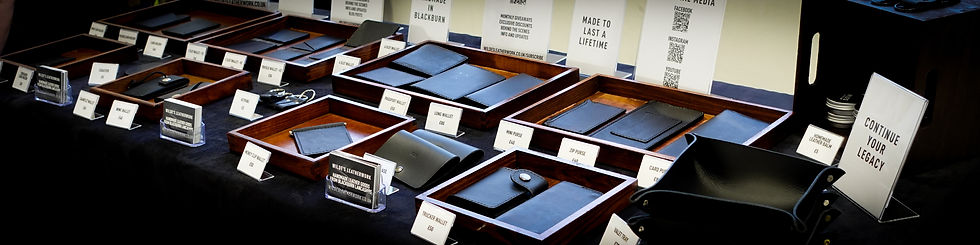
It keeps money moving through your town
A local business doesn't exist in isolation.
The café owner might buy their bread from a local bakery. The bakery might use a local accountant. The accountant might buy lunch from another independent café. The shopkeeper might use a local photographer, printer, electrician or tradesperson.
One purchase can therefore become part of a chain of local transactions.
This is often referred to as the local multiplier effect: money spent with local businesses has more opportunities to circulate within the community rather than immediately flowing elsewhere. Local authorities and government campaigns have long highlighted this relationship between local spending, employment and stronger communities.
It doesn't mean every penny stays in the town. Businesses still have suppliers, taxes, rent and other costs outside the area.
But the principle is simple:
The more of your spending you can keep local, the more economic activity you can help create around you.

Local shops make our towns worth visiting
A town centre is more than a collection of shops.
It is somewhere to meet a friend for coffee. Somewhere to browse. Somewhere to discover something you weren't expecting. Somewhere you recognise faces and have conversations.
Independent businesses give towns their character.
Walk into ten different towns dominated by the same national chains and they can begin to feel remarkably similar.
Walk through a town filled with independent cafés, makers, bookshops, galleries, restaurants, markets, barbers, boutiques and specialist shops, and suddenly that town has an identity of its own.
Research from Central Lancashire has highlighted the growing importance of independent retailers and the desire among customers to choose local operators over larger regional and national brands.
Your spending helps decide what your town looks like.
If we want interesting, distinctive and vibrant town centres, we have to support the businesses that make them that way.

Buying local can mean buying something genuinely unique
There is something special about buying an object that wasn't made thousands of miles away in a huge factory and shipped through a vast distribution network.
It might have been made by someone in a workshop a few streets away.
You might be able to meet the person who made it.
You might know their name.
You might even see them at the market, in their shop or walking around town.
That creates a completely different relationship with the things we buy.
Instead of simply being another product on a website, an item can have a place, a person and a story behind it.
Government research into shopping locally has similarly highlighted that independent businesses can offer products that aren't available elsewhere, including unusual and non-mass-produced goods.
And that is particularly important when it comes to craftsmanship.
A handmade item doesn't just represent the finished product. It represents someone's time, skill, experience and livelihood.
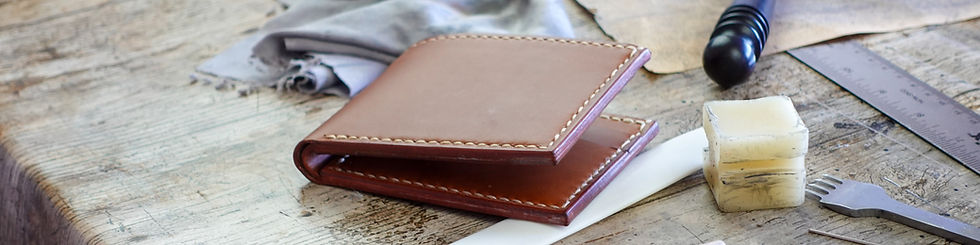
Buying locally made keeps craftsmanship alive
There is another level of local shopping that deserves more attention:
Buy local. Buy independent. Buy made local.
These aren't quite the same thing.
A local shop selling a mass-produced product is still contributing to the local economy.
But when you buy something made in your own town, you are supporting the maker as well as the place where the product is sold.
You are helping keep skills alive.
You are helping someone continue working at their craft.
You are helping make it possible for a small workshop to exist.
And you are helping demonstrate that there is still a market for things made carefully, rather than simply made cheaply.
That matters because traditional skills can disappear surprisingly quickly when there is no economic reason for people to continue practising them.

It supports real people, not just businesses
One of the easiest things to forget about a small business is that there is usually a person behind it.
When you buy from an independent maker, that sale isn't just another number on a spreadsheet.
It might help pay their rent.
It might pay for another piece of equipment.
It might allow them to buy better materials.
It might help them employ someone.
It might simply mean they can keep doing something they have spent years learning how to do.
Government guidance on shopping locally has specifically pointed to the role of local businesses in supporting and creating employment within communities.
That makes your purchasing decisions surprisingly personal.
Every time you choose where to spend your money, you are casting a small vote for the kind of economy you want around you.

It builds community
There is an economic argument for shopping local.
But there is also a human one.
Independent businesses are places where people get to know each other.
The same customer comes back every Saturday.
The barista knows their order.
The shopkeeper knows their name.
The maker remembers who bought something six months ago.
Those little interactions may seem insignificant, but collectively they help create somewhere that feels like a community rather than simply a place where people happen to live.
Research into local shopping has found that consumers value these relationships, with many saying their connection with favourite local businesses goes beyond a purely transactional relationship.
A successful town isn't just somewhere people spend money.
It's somewhere people want to spend time.

And it doesn't have to cost you more
Shopping local doesn't mean you have to buy everything from an independent business.
It doesn't mean you should ignore price or convenience.
Sometimes the supermarket is cheaper. Sometimes Amazon is faster. Sometimes a national chain has exactly what you need.
That's reality.
But perhaps we can be a little more deliberate about the purchases where we have a choice.
Instead of automatically searching for the cheapest option online, ask:
Can I buy this from someone nearby?
Instead of ordering something mass-produced, ask:
Is there someone in my town who makes this?
Instead of driving to an out-of-town retail park, ask:
Could I spend an hour on my local high street instead?
And if you discover a great independent business, tell someone about it.
Follow them.
Share their posts.
Leave a review.
Recommend them to a friend.
Shopping local is important, but talking about local businesses is free and can be incredibly valuable too. Local councils themselves encourage people to support independents through recommendations, reviews and social media, not simply purchases.

Imagine if we all did it a little more
Imagine £20 spent with a local café.
Then another £20 at the independent shop next door.
A few pounds at the local market.
A locally made gift for someone's birthday.
A handmade item produced in your own town.
None of these purchases will transform a town on their own.
But thousands of people making small choices can.
Because towns aren't revitalised by slogans.
They're revitalised by people actually using them.
The shops stay open because people shop in them.
The cafés survive because people sit in them.
The makers continue because people buy what they make.
The high street stays interesting because independent businesses have a reason to be there.
And the town develops a character that cannot be replicated by an algorithm or a national chain.

So next time, look a little closer to home
Before you click Add to Basket, look around.
There might be someone making exactly what you're looking for just a few miles away.
There might be a small shop in your town selling something you didn't even know existed.
There might be a craftsman working quietly in a workshop, keeping a traditional skill alive.
And there might be a local business that survives or struggles based on whether people like you choose to support it.
Where you spend your money matters.
Buy less, buy better.
Buy from people who care about what they make.
And whenever you can, keep it local.

Built in Blackburn. Designed to outlast the rest.
At Wilde's Leatherwork, every piece is handmade in Blackburn, Lancashire, using carefully selected leather and traditional craftsmanship.
From wallets and card holders to belts, purses and other leather goods, each piece is made by hand rather than mass-produced.
If you'd like to support independent British craftsmanship while owning something made right here in Blackburn, take a look at the latest Wilde's Leatherwork collection.
Thank you :)


Comments