
The Hierarchy of Business: Where Does Your Money Really Go?


The Hierarchy of Business: Where Does Your Money Really Go?
Most people make buying decisions based on three things:
Price.
Convenience.
Reviews.
But there's another question that rarely gets asked:
What happens to my money after I spend it?
Every purchase supports a business model. Whether you're buying a coffee, a wallet, a piece of furniture, or a gift, your money doesn't simply disappear after the transaction.
It flows somewhere.
The businesses we choose to support help shape our communities, local economies, and the future of independent craftsmanship.
Not all businesses operate in the same way, and understanding the difference can completely change how you view spending.

Level 1: Locally Made and Locally Sold
This is the highest level in the hierarchy.
A local maker creates a product within their own community and sells it directly to the customer.
Think of artisans, craftspeople, independent manufacturers, and skilled tradespeople.
The product is made locally.
The business is local.
The owner is local.
The profits remain local.
When you buy from businesses like these, your money has the greatest chance of circulating within your community. It helps support local livelihoods, local suppliers, local services, and often preserves skills that have been passed down through generations.
The price you're paying isn't funding shareholders on the other side of the world.
It's paying for quality materials, skilled labour, experience, and sustainable business practices.
These businesses often cannot compete with mass-produced imports on price.
Instead, they compete on craftsmanship, quality, service, and authenticity.

Level 2: Made Elsewhere, Sold Locally
This is where many independent shops and retailers sit.
The products may be manufactured elsewhere, sometimes overseas, but they are sold through local businesses.
While the production itself isn't local, these businesses still provide important benefits to the community.
They create jobs.
They pay local taxes.
They rent local premises.
They contribute to local high streets and town centres.
Part of your spending remains within the local economy.
These businesses play an important role and are often worth supporting, particularly when compared to large multinational alternatives.

Level 3: Made Elsewhere, Sold Elsewhere
At the bottom of the hierarchy are the large international marketplaces and mass-production giants.
Products are manufactured abroad, warehoused elsewhere, sold through global platforms, and delivered directly to consumers.
These businesses excel at scale.
They can often offer prices that smaller businesses simply cannot match.
But much of the money spent leaves the local economy entirely.
Very little remains within your community.
The focus is usually efficiency, volume, and growth rather than craftsmanship, local employment, or long-term customer relationships.
There is nothing inherently wrong with buying from these businesses.
Most of us do it from time to time.
The problem comes when convenience and low prices become the only factors that influence our decisions.

The Hidden Cost of Cheap
Every town has seen it happen.
Independent businesses disappear.
Traditional skills become rarer.
Local manufacturing declines.
High streets become increasingly uniform.
Consumers gain access to cheaper products, but communities lose something valuable in the process.
The cheapest option is rarely the cheapest when viewed through a wider lens.
The true cost often appears later through reduced local opportunity, fewer independent businesses, and less diversity in the products available to buy.

Voting With Your Wallet
Every purchase is a vote.
A vote for the type of businesses you want to see succeed.
A vote for quality or quantity.
A vote for craftsmanship or mass production.
A vote for local communities or global scale.
You don't have to buy everything locally.
Very few people can.
But being conscious of where your money goes can help create stronger communities and encourage businesses that genuinely care about the products they make.
Why Wilde's Leatherwork Exists
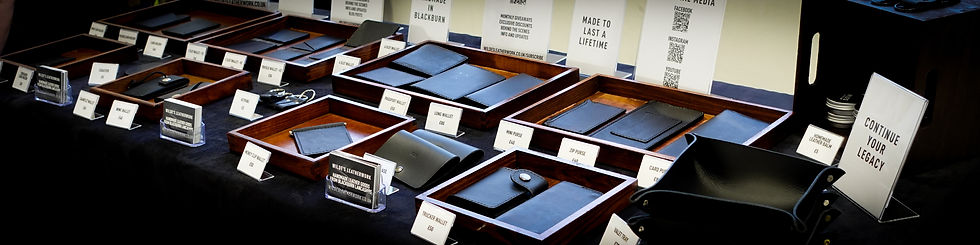
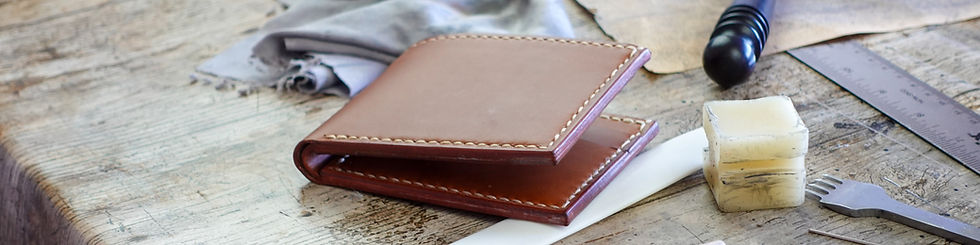
At Wilde's Leatherwork, every wallet and card holder is handmade by myself in Blackburn using premium vegetable-tanned leather.
Each piece is cut, stitched, finished, and inspected by hand.
There are no factories.
No mass production lines.
No shortcuts.
Just traditional craftsmanship, quality materials, and products designed to last for years rather than months.
When you buy from Wilde's Leatherwork, you're supporting local manufacturing, independent craftsmanship, and a business that believes products should be made properly the first time.
If you're going to spend money on something you use every day, why not choose something made by a real person who stands behind their work?
Shop Wilde's Leatherwork today and support locally made, locally sold craftsmanship that is built to last.


Comments