
What Is the Best Leather Alternative? The Answer May Shock You


What Is the Best Leather Alternative? The Answer May Shock You
Search “best leather alternative” and you will be flooded with buzzwords: vegan leather, plant based, eco friendly, cruelty free. Brands proudly claim their products are better for the planet than leather. Influencers repeat it. Articles regurgitate press releases. Almost nobody fact- checks it.
Here is the uncomfortable truth.
There is no leather alternative that matches real, high-quality leather for durability, repairability, honesty, or long-term sustainability.
And many so-called alternatives are not just worse, they are actively more harmful to the environment, built on deception, and designed to fail.
Let’s break it down properly.

First, a Hard Truth About “Plant Based” Leather
Despite what the internet tells you, all commercially viable plant or fruit based leathers rely heavily on plastic.
This is not opinion. It is physics and materials science.
Plant fibres on their own:
Are not abrasion resistant
Are not water resistant
Are not dimensionally stable
Are not durable under flex and friction
To turn them into something that looks and behaves like leather, they must be bonded, coated, or laminated with plastic. Usually polyurethane (PU), sometimes PVC.
If plastic is used as a binder, coating, backing, or structural layer, it is not sustainable.
If plastic is hidden behind “plant based” marketing, it is unethical.
Initial ingredients do not matter if the final product is plastic.
PU Leather (Polyurethane)
What it actually is: Plastic coated fabric. No ambiguity.
Plastic content: Extremely high. Entirely plastic based.
Breathability: None. Plastic does not breathe.
Longevity: Short term only. Peels, cracks, flakes. Designed to fail.
Repairability: Effectively zero. Once it cracks, it is finished.
End of life: Landfill. Microplastics. No biodegradation.
Ethics: Marketed as “vegan” while being fossil fuel derived plastic. A lie by omission.
Compared to real leather: Not even remotely comparable. Leather can last decades. PU is disposable by design.
PVC Leather
What it actually is: Plastic. Worse plastic.
Plastic content: 100 percent plastic, with toxic additives.
Environmental impact: One of the most environmentally damaging plastics in use.
Longevity: Stiff, cracks, degrades. Looks awful with age.
Repairability: None.
End of life: Landfill for generations.
Compared to leather: Inferior in every possible way.
Pineapple, Apple, Grape, Cactus, Mushroom “Leather”
These are all marketed differently, but functionally similar.
What they actually are: Small amounts of plant waste mixed with plastic binders and coatings.
Plastic content: High. Always. Without plastic, they would fall apart.
False marketing: Brands highlight the plant source and downplay or obscure the plastic content. Many rely on self-reported data. Independent long-term studies are scarce or nonexistent.
Durability: Not durable. Full stop. If a product cannot reliably last decades, it is not durable.
Repairability: Poor to nonexistent. Plastic composites do not repair like leather.
End of life: Landfill. Plastic does not disappear because pineapple leaves were involved once.
Ethical concerns: Misleading sustainability claims. Greenwashing. In some regions, questionable labour standards. Fake or unverified “studies” used as marketing tools. Calling these materials ethical requires ignoring the full supply chain.
Compared to high quality leather: They do not outperform leather in any meaningful way. Not lifespan. Not repairability. Not honesty.
“Tomato Leather” and Other Extreme Greenwashing
Some so-called alternatives are outright fiction. The tomato leather scam in particular, which originates from India. Cheap Chinese slave labour PU leather items, resold as 'tomato leather' to unsuspecting vegans. No one bats an eye. A lot of handshakes, pats on the back, and a small group of scammers getting rich.
Materials marketed as tomato leather or fruit leather often:
Contain no amount of the advertised plant
Are simply plastic sheets or PU leather used under a different name.
Are manufactured in regions with little transparency
Rely on fabricated or unverified documentation
Often just cheap Chinese imports - even with the same product images used!
They meet a narrative. People stop asking questions.
This is not sustainability.
This is marketing dressed as ethics.

Compared to leather
Durable in its own category. Not a replacement for leather goods.
Let’s Talk About Durability Properly
Words like “not as durable” are misleading.
Either a material is durable long term, or it isn’t.
If a wallet lasts 2 to 5 years, it is not durable.
If it cannot be repaired, it is not sustainable.
Are 20 plastic wallets more sustainable than 1 high quality leather wallet that lasts decades?
Of course not.
Replacing plastic again and again is environmental negligence, not progress.
Repairability: The Forgotten Truth
Leather can be:
Re-stitched
Patched
Conditioned
Refinished
Reworked
Most alternatives:
Tear instead of stretching
Crack instead of ageing
Cannot be stitched once damaged
Cannot be restored
A product that cannot be repaired is a disposable product. Disposable products are not ethical.

Cheap Leather Can Be Bad, And We Should Talk About That
Not all leather is good.
Cheap, mass-produced leather:
Uses heavy chemicals
Is often chrome tanned with little regulation
May involve unethical labour
Is designed for volume, not longevity
This matters.
Bad leather exists.
But bad alternatives do not justify worse materials.
The answer is not plastic.
The answer is better leather.

So What Is the Best Leather Alternative?
There isn’t one.
No widely used alternative:
Outlasts leather
Repairs like leather
Ages like leather
Breathes like leather
Avoids plastic
Has proven decades-long performance
If such a material existed, it would be widely documented. It is not.
The uncomfortable truth is that high quality, responsibly sourced leather is still the most honest, durable, and sustainable option for leather goods when longevity is prioritised.

The Real Sustainable Choice: Buy Less, Buy Better
Sustainability is not about buzzwords.
It is about lifespan.
One well-made leather wallet used for 20 or 30 years is infinitely better than a drawer full, or landfill, of cracked plastic replacements.

Choose Honesty. Choose Craftsmanship.
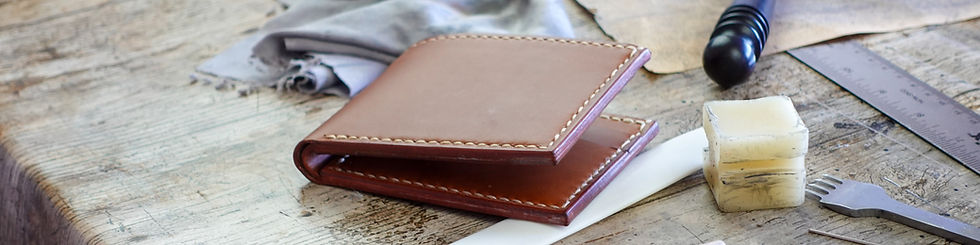
At Wilde’s Leatherwork, I do not hide behind greenwashed language or trendy materials. I work with real, authentic, high quality leather, made properly, designed to last, and built to be repaired. Obviously, and unfortunately you can't escape the use of plastics in modern times, however I do my best to avoid purchasing or using single-use plastics, from products to packaging.
Handmade in the UK.
Ethical sourcing
Honest craftsmanship
No plastics doing the heavy lifting
Built with sustainability, and lifetime use in mind.
If you care about durability, transparency, and buying something once instead of twenty times, explore the collection at Wilde’s Leatherwork.
Because sustainability is not plastic. It is longevity.



Comments